Few things spark as much excitement on a winter morning as the words “school is closed.” But behind that simple announcement is a surprisingly careful decision-making process. Understanding how snow days work can help you plan ahead, set realistic expectations and avoid refreshing the news feed at 5 a.m.
This guide walks through who makes the call, what weather actually triggers a closure, when announcements usually land and how you can estimate the odds for your own town.
What Exactly Is a Snow Day?
A snow day is a full closure of schools (and sometimes workplaces) because winter weather makes travel unsafe. It is not only about how pretty the snow looks. The core question decision-makers ask is simple: can students, staff and buses get to and from school safely?
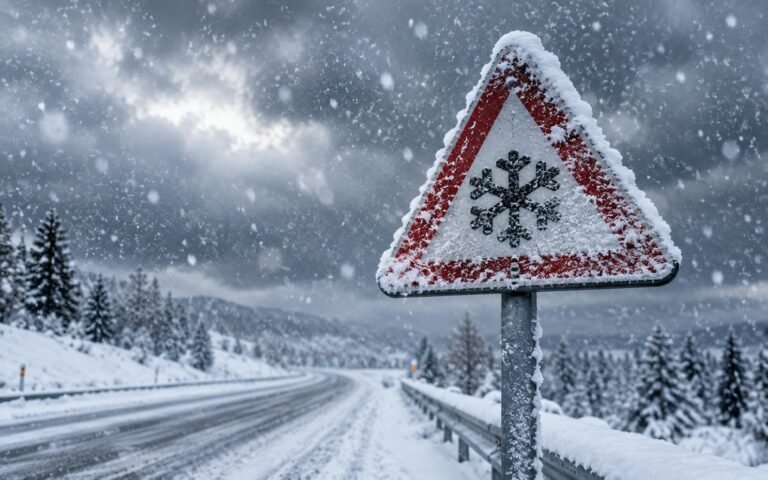
That means a snow day can be called for heavy snowfall, but also for ice, dangerous wind chill, flooded or refrozen roads, or a forecast that is expected to worsen during the exact hours children would be travelling.
Who Decides Snow Days?
In most regions, the decision sits with the school district rather than an individual school. A superintendent, often working with a transportation director and local road crews, gathers information and makes one call that covers every school in the district.
Because one person signs off, decisions can vary a lot from town to town, even in the same storm. A district with hilly rural bus routes may close when a neighbouring city with flat, well-salted roads stays open. If you want the fuller picture, our guide on who decides snow days breaks the process down step by step.
What Weather Triggers a Closure?
There is no single magic number, but a few conditions do most of the work:
- Snowfall amount and timing. Several inches falling during the morning commute matters far more than the same amount overnight that crews can clear.
- Ice and freezing rain. Even a thin glaze is extremely dangerous and is one of the most common closure triggers.
- Extreme cold and wind chill. Many districts close or delay when wind chills drop to dangerous levels, even without fresh snow.
- Road and sidewalk conditions. Untreated, refrozen or blocked routes can close schools after the snow has already stopped.
For a deeper look at each factor and how they combine, see what causes a snow day.
When Are Snow Days Announced?
Timing falls into two broad patterns. When a major storm is already certain, some districts announce the night before to give families time to plan. More often, the call comes in the pre-dawn window, roughly 4:30 a.m. to 6:30 a.m., after crews have driven the roads at first light.
Announcements usually go out through several channels at once: the district website, automated phone, text and email alerts, social media and local news stations. Signing up for your district’s official alert system is the fastest way to hear first.
How Early-Morning Decisions Actually Happen
On a borderline night, the transportation team may be awake well before sunrise, driving sample bus routes to feel how slick they really are. They check the latest radar, the official forecast from a service such as the National Weather Service or your national meteorological agency, and the temperature trend for the next few hours.
If conditions are improving fast, a district may choose a delayed opening instead of a full closure. That two-hour buffer gives crews time to treat roads and the sun time to help. We compare both options in snow day vs. delayed opening.
Do Snow Days Get Made Up?
Usually, yes. Many school calendars include a handful of built-in snow days. Once those are used, additional closures may be added to the end of the school year, attached to a holiday break, or increasingly covered by a remote-learning day so the calendar stays intact.
Policies differ widely by country and district, so the best source is always your own school’s published calendar and closure policy.
How to Estimate the Odds Yourself
You cannot control the decision, but you can get a realistic read on how likely it is. The ingredients are the same ones districts watch: current snowfall, temperature, precipitation chance and overall conditions.
Instead of piecing that together from a full forecast, you can enter your city or postal code into our free Snow Day Calculator. It pulls live weather for your exact location and turns it into an easy-to-read likelihood score in seconds, so you have an early, informed guess before the official word arrives.
Conclusion
Snow days are the result of a quick but careful safety decision, made district by district, based on real conditions on the ground. Knowing who decides, what they watch and when they announce takes the mystery out of that early-morning wait. Check your district’s official alerts for the final word, and use a Snow Day Calculator to size up the odds the night before.