When schools close for snow, it can feel like the decision appears from nowhere in the early hours. In reality, it is the result of a quick but structured process involving real people watching real conditions. Here is who makes the call and how they do it.
The Person Who Signs Off
In the vast majority of regions, the final decision rests with the school district, not an individual school or teacher. The superintendent, or an equivalent senior official, is the one who signs off. That is why a closure usually covers every school in the district at once, from the smallest primary to the largest high school.
The Team Behind the Call
The superintendent rarely decides alone. A typical decision draws on:
- The transportation director, who knows every bus route and which ones turn treacherous first.
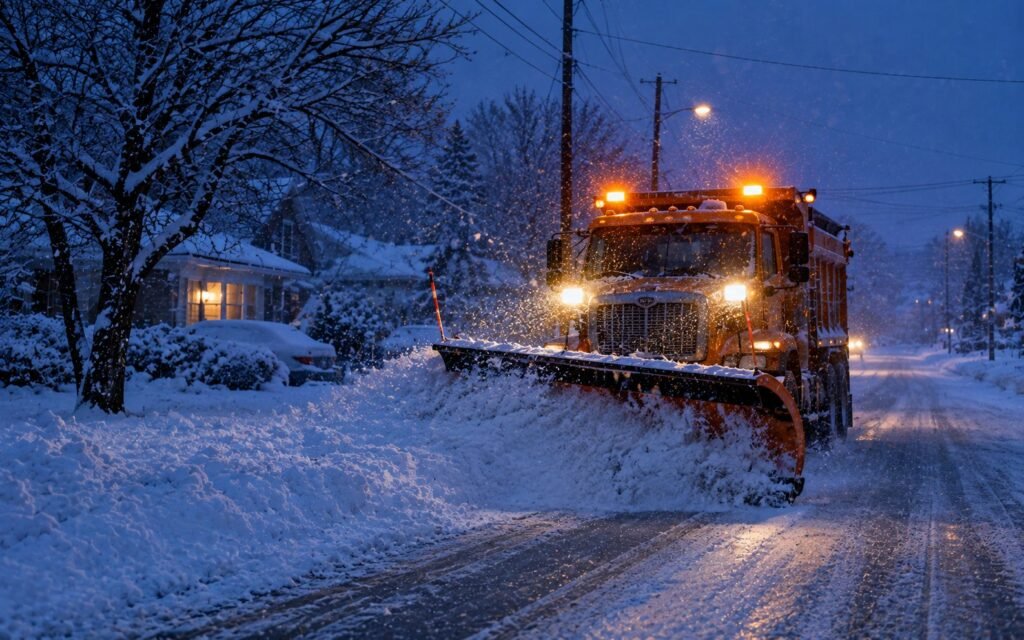
- Local road and public-works crews, who report on ploughing, salting and which streets are still impassable.
- Official forecasts from a national weather service, providing the expected timing and severity.
- Neighbouring districts, whose early calls offer a useful reference point.
The Pre-Dawn Routine
On a borderline night, the work starts long before sunrise. Transportation staff may be awake by 4 a.m., physically driving the worst bus routes to feel how slick they are, something no forecast can fully capture. They weigh the latest radar, the temperature trend and whether conditions are improving or worsening.
The goal is to decide early enough that families, staff and bus drivers get reasonable notice, typically by 5:30 to 6:30 a.m. For the broader timeline, see how snow days work.
The Factors They Weigh
The decision balances several questions at once. Can buses safely complete their routes? Can students walking or waiting at stops avoid frostbite? Will conditions get better or worse during the commute? Are the roads treated, or still ice-covered from an overnight refreeze?
Safety is the common thread. The weather factors behind all of this are covered in what causes a snow day.
Closure, Delay, or Open?
The call is not only yes or no. A delayed opening, often two hours, is a middle option that buys time for crews to treat roads and for the sun to help, while still holding classes. Districts choose it when conditions are expected to improve quickly. We compare the two in snow day vs. delayed opening.
Why Neighbouring Towns Disagree
It is common for one district to close while the district next door stays open in the very same storm. This is not random. Hilly, rural routes are more dangerous than flat, well-salted city streets. A district with fewer ploughs, a tighter budget or a more cautious policy will close sooner. Local geography and resources genuinely change what is safe.
What About Parents’ Judgement?
Even when schools stay open, families usually retain the final say for their own children. If you believe travel is unsafe, most districts will record a weather-related absence as excused. Always follow your own school’s attendance policy, but your child’s safety is a legitimate reason to keep them home.
Getting Ahead of the Announcement
You cannot sit in on the superintendent’s 5 a.m. call, but you can watch the same ingredients they do. Our Snow Day Calculator reads the live weather conditions for your location and turns them into a likelihood score, giving you an informed sense of which way the decision may lean before it is announced.
Conclusion
Snow days are decided by real people, usually a superintendent and a transportation team, making a careful safety judgement in the pre-dawn hours based on forecasts, road conditions and local knowledge. That human element explains both the early-morning timing and why towns so often differ. For the official word, trust your district’s alerts; for an early read, check a Snow Day Calculator.